GUIDE · 30 September 2026 · 8 min read
The free $10,000 Bynix demo account: how to practise like a pro
Start with a free $10,000 demo on Bynix, practise on live charts, test one simple plan, and learn when to move from demo to real trading.
Why the Bynix demo account is worth your time
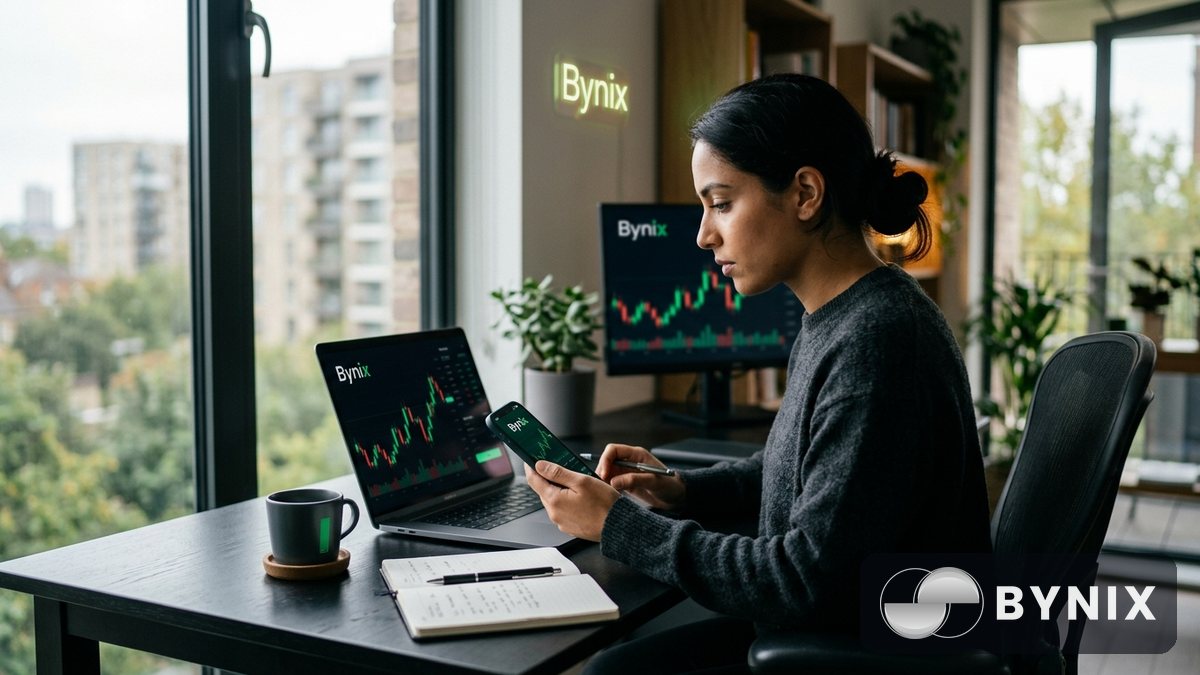
If you are new to binary options, or if you already trade and want a cleaner way to test ideas, the free Bynix demo account is the fastest place to start. You get a $10,000 virtual balance, the same live-style trading environment, and access to the same charting tools you would use on a real account.
That matters because practice only helps when the practice feels real. On Bynix, you can watch the market, choose CALL or PUT, set an expiry from seconds to a day, and learn how your strategy behaves without risking your own money.
The demo is also easy to use. There is no deposit needed to start, and you can top up the virtual balance any time if you want to reset your practice routine. If you want to move straight into the platform, you can create your account at register and open the demo from there, or go directly to the demo page.

What you can practise on the demo
On the demo, you can explore the full trading workflow at your own pace:
- Read price action on live charts
- Test one strategy at a time
- Use the 11 timeframes and drawing tools
- Add indicators to see what supports your decision
- Try different expiries without pressure
- Build consistency before you risk real funds
Because Bynix offers 140+ OTC markets open 24/7, the demo is useful whether you prefer forex majors, crypto, metals like gold and silver, oil, indices, or US stocks. You can practise during the London session, after work in India or Bangladesh, or late at night in Nigeria and LatAm when your schedule is free.
How to open the demo in one tap
Opening the demo is simple. The point is to reduce friction so you can start learning right away.
- Go to the Bynix registration page or the demo page.
- Create your profile if needed.
- Open the demo account.
- Start with the $10,000 virtual balance.
- Top up the demo balance later if you want a fresh practice start.
You do not need to fund a real account to explore the interface. That makes the demo especially useful for traders who want to understand the platform first, compare assets, or build confidence before making a deposit.
The experience is designed to feel close to live trading: same market flow, same chart tools, and the same decision process. That is exactly what you want when you are trying to build muscle memory.
A quick note on the platform
Bynix also gives you practical extras that help during practice:
- 24/7 human + AI support if you get stuck
- A browser terminal for desktop use
- Android APK access and add-to-home-screen support for iPhone and Android
- Crypto markets anchored to live CoinMarketCap prices
So whether you practise on a phone in Dhaka, a laptop in Lagos, or a browser in São Paulo, the demo is easy to keep open and easy to review.
A simple 7-day demo plan for beginners
The biggest mistake new traders make is jumping between strategies. A better approach is to follow one plan for one week and write down what you learn.
Day 1: learn the chart
Spend the first session just watching price movement. Do not rush into trades.
- Pick one market only, such as EUR/USD, BTC, gold, or an OTC asset
- Open the chart on two timeframes
- Mark the recent high and low
- Watch how candles react near those levels
Your goal is not to predict everything. Your goal is to start seeing structure.
Day 2: choose one strategy
Select one simple method and keep it basic. For example, you might focus on trend-following, support and resistance, or a basic breakout idea.
- Use the same asset
- Use the same expiry
- Use the same stake size
- Take only the setups that match your rules
Avoid changing the strategy after one losing trade. Demo practice works best when the rules stay constant.
Day 3: add a trading journal
Write down every trade. This is where real learning starts.
Track:
- Asset traded
- Time of trade
- CALL or PUT
- Expiry used
- Reason for entry
- Result
- What you would change next time
You can keep this journal in a notebook, a spreadsheet, or even notes on your phone. The format matters less than the habit.
Day 4: focus on fixed stake size
One reason beginners struggle is inconsistent risk. On demo, practice with a fixed amount so your decisions are easier to review.
For example:
- Use the same virtual stake for every trade
- Do not increase size after a win
- Do not chase losses
- Review whether your entries improve when emotions stay flat
This is a good habit for traders who plan to move into a real account later.
Day 5: review your timing
Now check whether your entries are too early, too late, or simply taken during weak market moments.
Ask yourself:
- Did I trade when price was already stretched?
- Did I wait for confirmation?
- Did I enter because of a rule, or because I felt impatient?
Small timing improvements often matter more than adding another indicator.
Day 6: test market conditions
If your first week has gone well, try your same setup in a different market or session.
- Trade a forex pair instead of crypto
- Try a different OTC asset
- Compare a shorter expiry with a slightly longer one
This helps you see whether your strategy is flexible or only works in one narrow condition.
Day 7: review, adjust, repeat
At the end of the week, read your journal and look for patterns.
- Which setups were strongest?
- Which timeframes felt clearest?
- Did you follow your rules?
- Were your losses caused by the setup or by poor execution?
If you can answer those questions clearly, you are learning properly.
Tip: treat the demo like real money. If you trade carelessly on demo, that same habit often follows you into live trading.
When you are ready to move to a real account
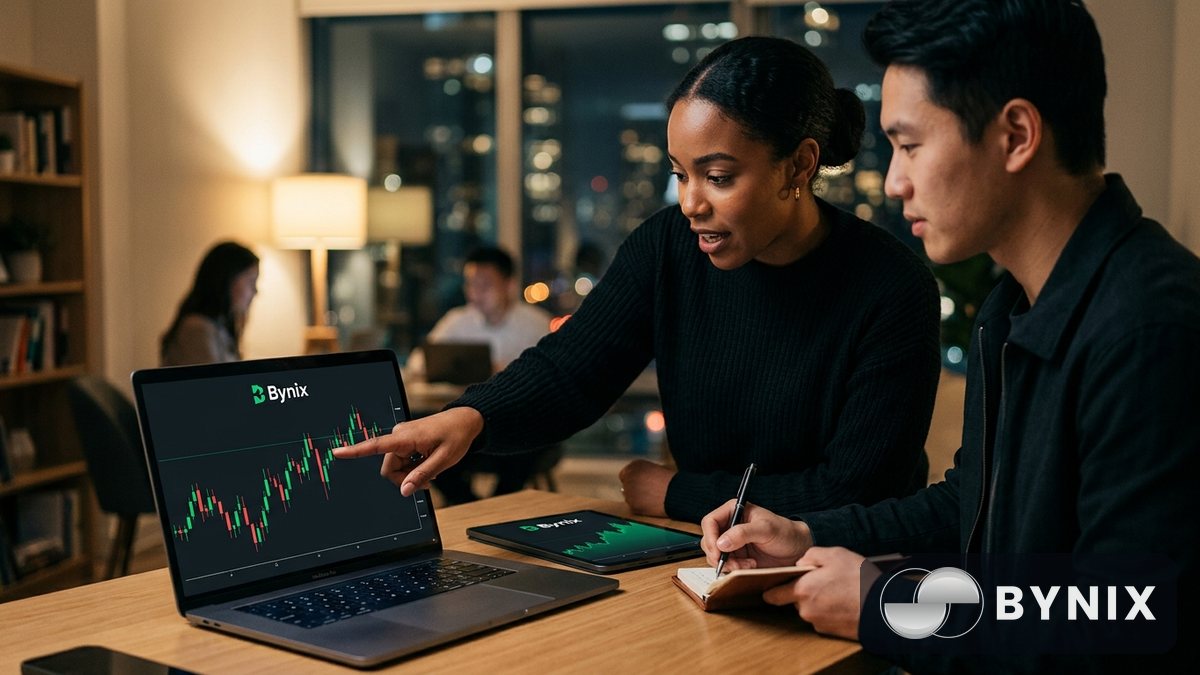
The demo is for learning, but at some point you may want to trade live. That step should happen only when you are comfortable with your process, not because you feel pressure to hurry.
You may be ready for a real account if:
- You can explain your strategy in simple words
- You can follow the same rules for at least a week
- You have a journal with real notes, not just random clicks
- You understand the expiry and stake size you prefer
- You are no longer treating every trade like a guess
If you decide to start live trading, Bynix makes the transition straightforward. Minimum deposit starts at $5 for crypto and $10 for e-wallets, deposits are credited instantly, and withdrawals are processed automatically in about 30 seconds. For users who want a bigger path, Bynix also offers Funded challenges with account sizes from $1,000 to $250,000, one evaluation phase, no time limit, and a verifiable certificate after approval. You can explore those options on the funded accounts page.
You do not need to choose between demo and real forever. Many traders move back and forth:
- Demo to test a new strategy
- Real account to execute a plan they already understand
- Demo again to refine entries or practice a new market
That flexibility is useful, especially if you trade around work, family, or different time zones.
Keep learning, then scale slowly
The best use of the Bynix demo account is not to “win” fake trades. It is to build a repeatable process you can trust. Start with the free $10,000 balance, focus on one market, keep your journal, and make your decisions slower and cleaner than you would in a rush.
If you also want to grow beyond solo practice, Bynix has an affiliate programme for partners who want to share the platform with their audience and track performance in the dashboard.
A strong trading habit usually starts small: one chart, one strategy, one journal, one week at a time.
Binary options trading involves risk, and you can lose the amount you invest. Only trade money you can afford to risk, and use the demo to build skills before going live.